Why Industrial Property Became the Quiet Winner
Warehouses and logistics space followed the shift in how goods reach customers.
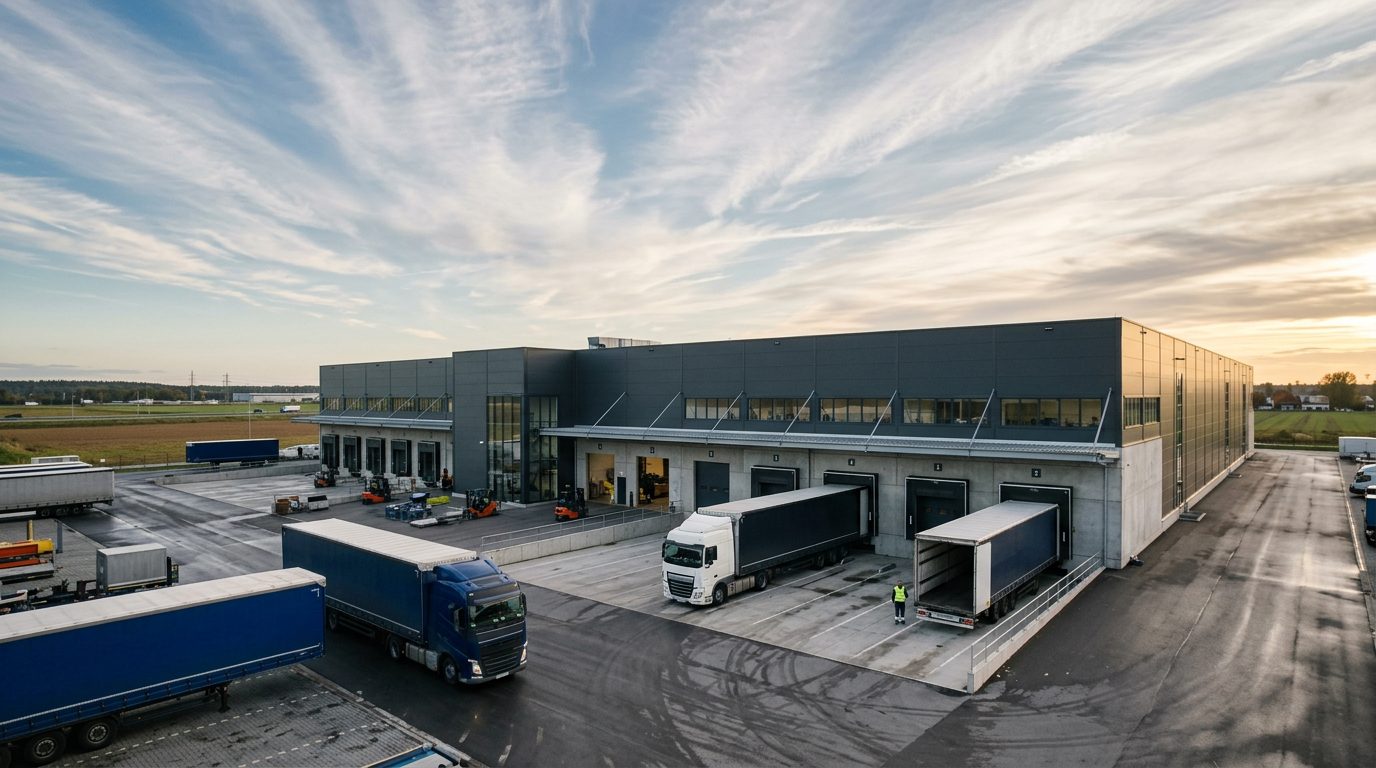
A semi-trailer backing into a concrete loading dock on the periphery of an interstate interchange represents the unglamorous mechanics of modern commerce. For decades, commercial property portfolios leaned heavily toward glass-fronted office towers and suburban shopping malls, treating distribution sheds as commodity assets with modest yields. That hierarchy inverted as consumer buying habits migrated to digital channels, turning standard warehouse bays, high clear-span ceilings, and wide truck turning aprons into the indispensable connective tissue of global supply networks.
The transition followed a structural change in how inventory moves through physical space. Retail store shelves once functioned as the final holding point for goods awaiting purchase, but modern fulfillment models require inventory to sit closer to transportation corridors rather than suburban foot traffic. Companies such as Amazon demonstrated the advantage of holding merchandise in vast fulfillment centers that operate around the clock. As delivery speed became a competitive requirement, industrial property evolved from simple storage space into active production facilities.
For corporate operators and real estate investors, the primary financial appeal rests on the predictable mechanics of the triple net lease. Under these standard agreements, the tenant assumes responsibility for property taxes, building insurance, and structural maintenance. This operational structure insulates the asset owner from rising utility costs and routine facility repairs, creating an operating model with minimal landlord capital expenditure. Corporate leadership can forecast long-term holding costs with far greater reliability than is possible in multi-tenant office complexes.
A sound acquisition framework requires evaluating a building through transportation economics rather than pure square footage. Executive teams evaluate industrial property by analyzing drive-time contours, which measure how many consumer households a fleet can reach within a single driver shift. Proximity to highway interchanges, cargo rail spurs, and commercial air hubs directly dictates the tenant pool. A smaller building situated near a dense population center routinely commands higher rent than a massive structure positioned beyond the perimeter of efficient regional delivery routes.
Physical specifications have become equally critical as distribution centers integrate automation. Traditional warehouses required little more than dry floor space and basic lighting, but automated operations demand reinforced concrete flooring capable of supporting automated storage systems, as well as significant electrical capacity to power charging bays for robotic fleets. When an occupier invests heavy capital into custom sorting machinery and racking infrastructure, the likelihood of tenant renewal increases, shielding the landlord from the costly turnover cycles common to residential or commercial office properties.
Corporate supply chain design provides a second operational mechanism through the ongoing pivot from lean inventory management toward safety stock. Global shipping interruptions and cross-border chokepoints forced enterprises to hold several weeks of extra product within domestic borders. This strategic decision to hold buffer inventory generates sustained demand for regional distribution hubs. Even when consumer spending moderates, businesses continue leasing warehouse space to avoid the severe revenue losses caused by sudden stockouts and broken logistics links.
Failures in industrial property development typically stem from misjudging municipal infrastructure and neighborhood constraints. Developers frequently secure inexpensive parcels only to discover that the municipal power grid cannot deliver the electrical load required for high-throughput automation. In other instances, inadequate yard depth creates congestion, leaving transport trucks idling on public roads and drawing immediate regulatory fines from local zoning boards. A warehouse that lacks sufficient trailer parking stalls or permits for continuous overnight truck traffic quickly becomes functionally obsolete.
Capital allocators must also distinguish between regional big-box distribution centers and infill last-mile hubs. While large exurban facilities handle bulk freight consolidation, last-mile properties operate within older urban industrial zones where vacant land is nearly non-existent. Securing these inner-ring locations grants permanent competitive defensibility because local governments rarely approve new industrial zoning near established residential neighborhoods. Investors who control these irreplaceable urban infill nodes hold significant leverage during subsequent lease negotiations as delivery expectations accelerate.
The division between successful industrial assets and underperforming storage space will deepen around energy availability and automation readiness. Facilities constructed without adequate roof load capacity for solar generation, insufficient power substations, or interior clear heights that cannot accommodate multi-level racking will face persistent discounting. The enduring winners in the industrial sector will not be landlords who simply rent dry square footage, but those who view physical warehouses as mission-critical network nodes powering the broader digital economy.