What the Secondary Watch Market Says About Luxury
Resale behaviour has become a live signal of brand strength.
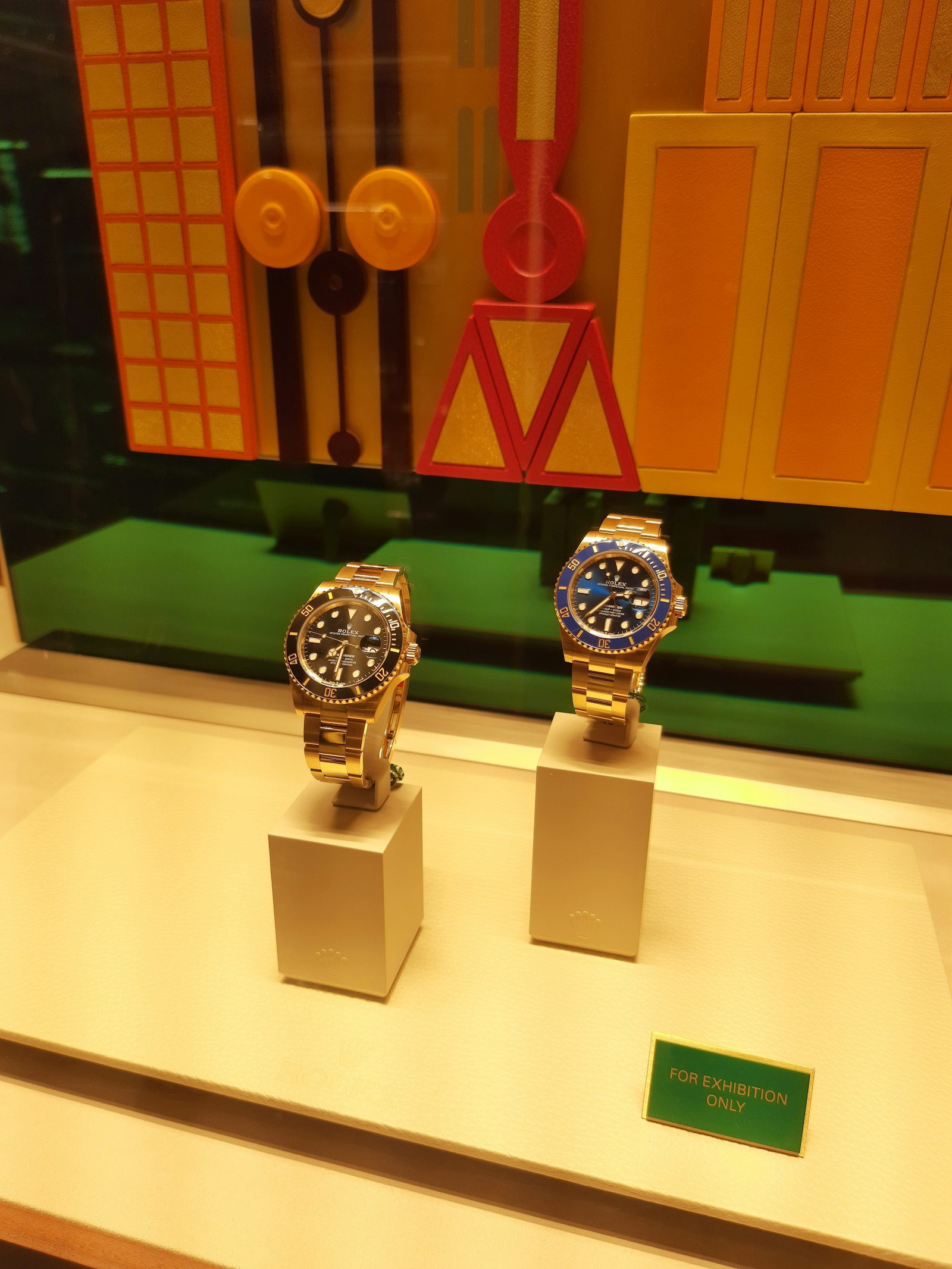
A buyer standing before a glass display case at an authorized watch salon routinely checks secondary market pricing on a handset before committing to a transaction. What once occurred behind closed doors among specialized dealers now unfolds directly on the retail floor. The secondary watch market has transitioned from a fringe clearinghouse for discontinued references into an instantaneous, public audit of a manufacture product appeal and long-term brand equity.
For decades, traditional luxury houses operated under an information asymmetry that favored the brand. Maisons dictated value through high entry prices, selective editorial coverage, and tightly controlled distribution corridors. Digital secondary platforms dismantled that insulation by publishing executed trades and visible bid-ask spreads. Today, consumers treat retail list prices as opening proposals, while secondary pricing functions as the market consensus judgment on authentic consumer desirability and enduring mechanical merit.
For brand leaders and luxury executives, this dynamic introduces a clear operational framework: treating secondary price retention as a primary health indicator rather than wholesale sell-in volume. A product line that immediately loses value outside the boutique signals overproduction or weak emotional resonance, regardless of how many units wholesale partners absorb. By tracking the spread between retail price and secondary realization, leadership can calibrate factory output before warehouse buildup forces quiet discounting.
Established Swiss manufacturers such as Rolex and Patek Philippe have long demonstrated how secondary performance anchors primary prestige. The sustained demand for classic steel sports models in independent channels reinforces retail desirability, allowing retail waitlists to function as powerful marketing engines. When consumers observe that an object retains its capital value upon leaving the salon, the original expenditure shifts psychologically from discretionary consumption to durable asset allocation.
A second critical framework centers on client allocation discipline. Traditional retail models reward store managers for immediate inventory turnover, which inadvertently incentivizes bulk sales to professional traders who liquidate stock into secondary channels. Forward-thinking executives realign dealer incentives around customer vetting and long-term relationship cultivation. Restricting multi-unit allocations and auditing warranty activations help protect product from rapid arbitrage, ensuring that timepieces land on the wrists of committed collectors rather than speculative intermediaries.
A third framework requires establishing institutional certified pre-owned operations to capture the secondary lifecycle internally. By authenticating, refurbishing, and warranting previously owned timepieces within their own retail networks, heritage brands establish an authoritative floor price for their catalog. This infrastructure allows maisons to recapture margin from recurring trades, collect valuable ownership provenance data, and engage newer collectors who prefer the security of manufacturer certification over peer-to-peer digital exchanges.
What frequently undermines luxury manufactures is misinterpreting speculative bubbles as permanent shifts in baseline consumer taste. When secondary market valuations spike on specific aesthetic trends, undisciplined leadership teams often respond by raising retail prices aggressively or skewing production capacity entirely toward those single silhouettes. When broader liquidity contracts, speculative traders exit en masse, leaving the brand with inflated retail prices, saturated core markets, and alienated traditional collectors who resent paying elevated rates for abruptly devalued inventory.
The secondary market also exposes the structural weakness of rapid novelty cycles. Houses that rely on constant limited editions to generate short-term revenue often discover that secondary platforms heavily penalize artificial rarity. Independent buyers gravitate toward core designs with continuous lineage, treating fleeting iterations as promotional novelties rather than true collectibles. True value accrues to stability, measured evolution, and institutional commitment to catalog continuity rather than opportunistic seasonal marketing.
Similarly, mechanical serviceability governs secondary durability. Collectors assign value to timepieces that independent watchmakers can maintain over several decades without proprietary barriers. Brands that deliberately restrict spare parts or deploy unserviceable electronic elements find their secondary values deteriorating as maintenance risks rise. A commitment to modular construction, durable materials, and accessible restoration ensures that older pieces remain functional assets rather than obsolete mechanical relics.
The coming era of luxury horology will permanently sideline houses that treat secondary trade as an inconvenient parallel economy. Real power will consolidate around manufacturers that integrate resale visibility directly into product development, distribution governance, and post-sale care. In an environment where every consumer carries a real-time price discovery tool, enduring prestige will belong exclusively to makers whose objects prove their worth long after leaving the salon.