MrBeast
From Creator to Business Empire
How audience, experimentation and reinvestment became the foundation of a new media company.
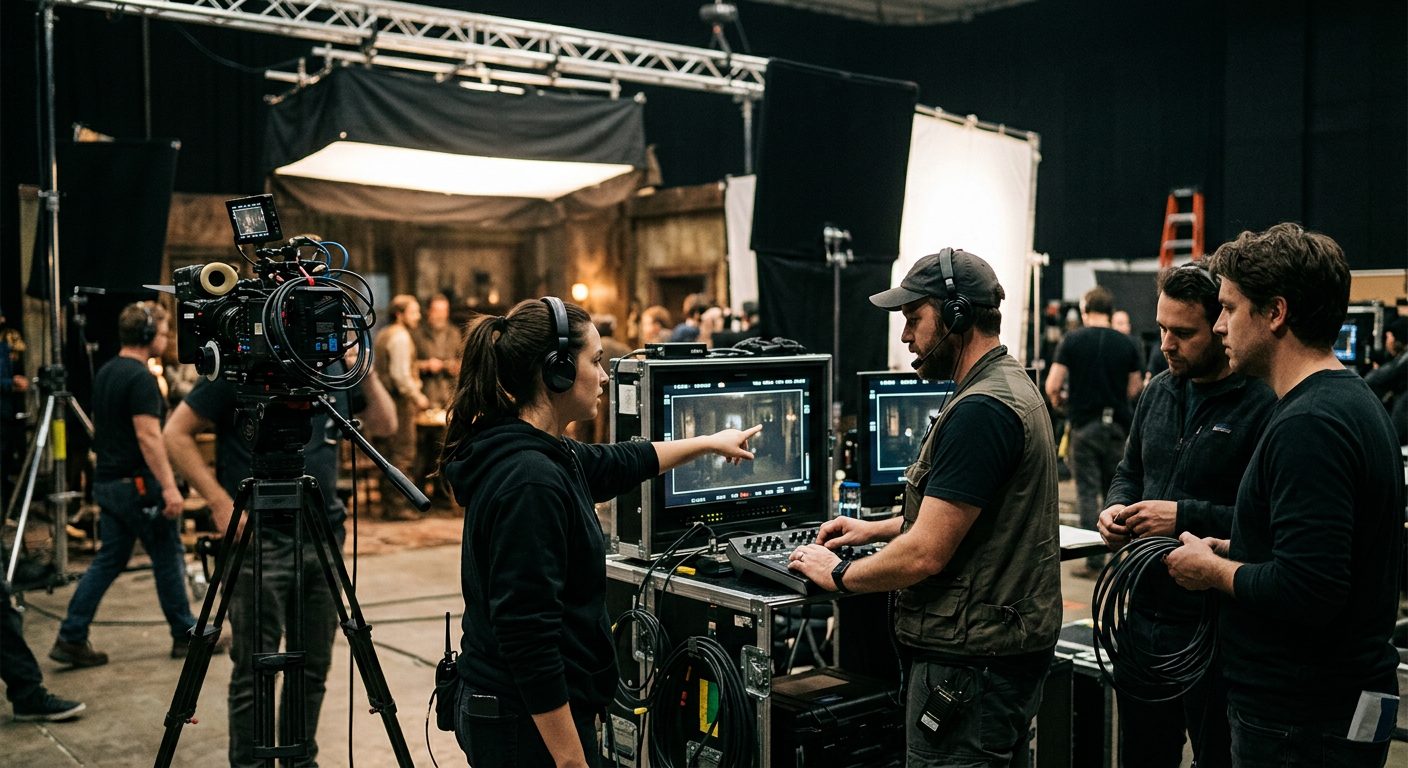
A physical walk through a modern digital video production facility reveals rows of fabrication bays, heavy rigging, and warehouse-scale staging areas rather than traditional office desks. The publicly visible pattern of Jimmy Donaldson, known globally as MrBeast, demonstrates how digital content creation moved from handheld cameras to industrial physical engineering. By treating media production as an intensive logistics discipline, the operation has replaced traditional television development cycles with continuous, high-throughput manufacturing of spectacle designed specifically to command human attention.
“Enduring advantage belongs to leaders who pair a clear point of view with operational discipline.”
The primary engine driving this expansion is a strict policy of capital reinvestment. In conventional media businesses, early commercial windfalls are routinely distributed as owner dividends or sheltered in defensive reserves. Here, the operating model deliberately channels incoming cash flow directly into larger production footprints, custom software, and complex mechanical sets. This perpetual recycling of capital creates an expanding moat, making it economically irrational for smaller creators to replicate the scale of the finished product.
For corporate executives studying this growth, the first actionable mechanism is pre-production validation. Rather than committing resources to a fully realized concept and hoping for audience resonance, the team subjects concepts, title structures, and visual packaging to rigorous comparative testing before heavy capital deployment begins. Packaging is treated as the product thesis itself. When distribution viability is established early, production teams can deploy physical capital with high confidence that the audience will cross the initial discovery threshold.
A second structural mechanism is parallel pipeline architecture. Traditional media production operates sequentially through writing, shooting, and post-production phases. In contrast, this enterprise runs multiple independent units simultaneously, where one team prototypes mechanical challenges while another films and a third manages digital asset editing. This industrial throughput prevents bottlenecks, maintains a predictable distribution cadence, and ensures that platform algorithms consistently receive fresh signals of audience engagement without seasonal disruptions.
The third framework centers on direct audience conversion into physical consumer goods. Instead of acting merely as a third-party promotional billboard for outside sponsors, the business built proprietary consumer packaged goods lines, such as snack foods and branded merchandise. By leveraging audience trust to secure prime retail shelf space, the company captured higher gross margins and established recurring revenue streams that remain insulated from shifting digital advertising rates.
Operating an enterprise at this velocity creates significant organizational complexity. The business has systematically transitioned from an informal circle of friends to a structured corporate hierarchy staffed with supply chain coordinators, construction leads, and specialized software developers. Managing hundreds of employees across diverse physical sites requires standard operating procedures and performance metrics that resemble those of mid-sized industrial manufacturers far more than conventional influencer management agencies.
The model carries severe vulnerabilities that commonly derail imitators who mistake production volume for sustainable strategy. Escalating spectacle creates an expensive expectation treadmill, where each subsequent project demands greater capital outlays simply to retain existing audience interest. Organizations that rapidly increase physical overhead without achieving exceptional distribution conversion frequently suffer acute cash crunches. When fixed operational costs outpace variable platform revenues, the entire capital recycling engine can grind to an abrupt halt.
Legacy media conglomerates face an uncomfortable reality when evaluating this operating model. Conventional television studios carry institutional overhead, union constraints, and protracted greenlight processes that make rapid iteration impossible. A digitally native media company, by contrast, receives granular audience retention data within minutes of release and adapts subsequent physical builds accordingly. This direct feedback loop eliminates layers of executive gatekeeping and aligns production spending directly with verifiable consumer behavior.
The strategic horizon will test whether this enterprise can institutionalize its brand equity beyond the presence of its founder. While consumer products and secondary media channels provide diversification, the core audience connection remains tied to a single individual persona. Establishing true corporate permanence will require delegating narrative authority to new personalities and building product lines that thrive entirely on their standalone value proposition.
The lasting influence of this operational playbook extends well beyond individual online video platforms. By integrating continuous behavioral testing, persistent capital reinvestment, and aggressive consumer product development, the enterprise has outlined the blueprint for modern media conglomerates. Those who successfully adapt these industrial disciplines will control consumer attention, while organizations clinging to legacy development cycles will find themselves structurally uncompetitive.