Automation Moves From Software Back Into Factories
Physical automation is drawing capital and talent that once went only to software.
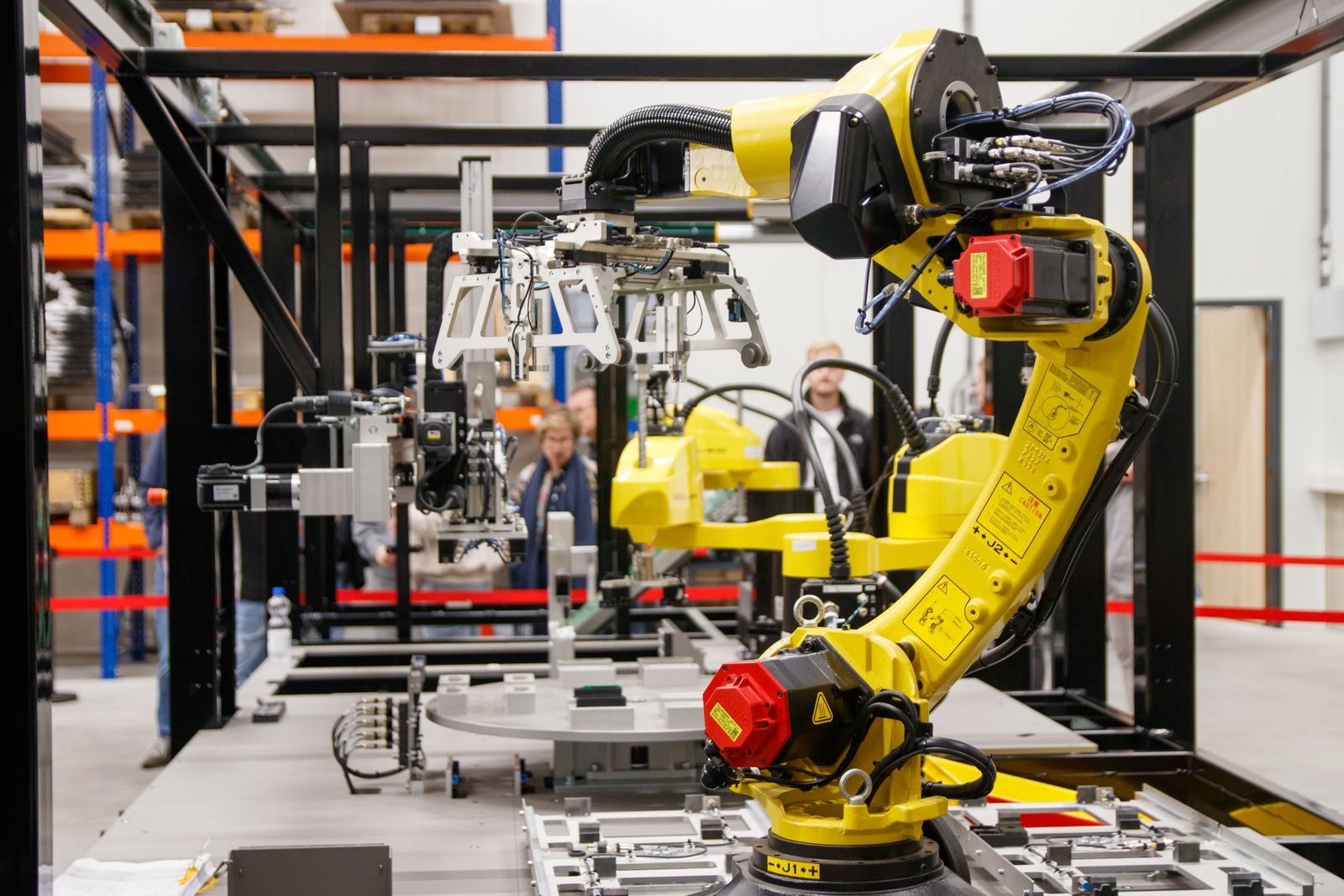
On modern production floors, computer vision cameras mounted above conveyer belts guide robotic arms through delicate subassembly steps that previously resisted mechanization. Engineers who once spent careers optimizing cloud workflows now calibrate end-effectors, test tactile sensors, and diagnose why sheet metal jammed during a test run. This shift illustrates an unmistakable pivot across industry, as physical plant floors regain the technical attention that software applications monopolized for decades.
For years, business strategy prioritized pure code because software scaled instantly without the friction of capital depreciation, transport delays, or physical safety regulations. That imbalance has begun to correct itself as digital productivity gains encounter physical bottlenecks in logistics, fabrication, and assembly. Enterprise leaders recognize that optimizing digital paperwork yields diminished returns when underlying products cannot leave the factory floor any faster. Real competitive advantage is shifting toward companies capable of manipulating matter with digital precision.
To navigate this environment, executives need a clear triage framework for physical process selection. The most reliable starting point is an audit of dimensional tolerance and cycle variance across existing manual operations. Processes with high cycle duration but low dimensional variance represent ideal targets for early deployment. Conversely, operations requiring constant human compensation for warped raw materials should remain manual until suppliers standardize inputs. Automating an inconsistent manual process merely produces defective components at higher velocity.
A complementary framework requires moving away from rigid, monolithic assembly lines toward modular automation cells. Traditional industrial automation relied on bespoke steel tooling that carried heavy financial risk and became obsolete whenever product designs changed. Modern facilities favor flexible work cells powered by collaborative robotics and reprogrammable fixtures that technicians can adjust quickly. This architectural modularity protects capital expenditures, allowing manufacturers to adapt production volumes and alter component geometries without writing off underlying machinery.
Another practical mechanism centers on brownfield sensor integration rather than wholesale equipment replacement. Heavy industrial machinery often remains structurally sound for decades, making total replacement economically impractical. Successful operators attach modern edge compute modules, optical sensors, and vibration monitors to legacy presses and milling centers. This strategy extracts real-time operational telemetry from mature assets, bringing old iron into modern scheduling architectures without the disruptive lead times and capital exposure of complete line teardowns.
Bridging the cultural divide between software engineering and mechanical maintenance determines whether these systems actually perform. Software developers expect rapid iteration, remote deployments, and silent error logging, while plant managers operate under strict physical safety protocols where unexpected motion can destroy tooling or injure workers. Leadership must establish integrated teams where software personnel spend regular operational hours directly beside floor technicians. Without shared accountability on the plant floor, software updates inevitably trigger unpredicted mechanical failures.
Where physical automation initiatives most frequently collapse is in the failure to account for physical wear and environmental contamination. Teams accustomed to pure software assume operating conditions remain uniform indefinitely. In reality, fine metal dust penetrates optical lenses, ambient temperature shifts alter hydraulic fluid viscosity, and mechanical joints lose calibration through continuous vibration. When automation plans fail to integrate rigorous physical maintenance routines and automated recalibration protocols, system availability declines rapidly, turning expensive automated installations into dormant floor ornaments.
Broader industrial realities reinforce this push toward factory automation. Persistent labor constraints across core manufacturing sectors have made manual production expansion difficult to sustain. Simultaneously, volatile global supply networks have forced companies to move production closer to domestic markets, where labor costs require higher levels of mechanization to maintain unit economics. Physical automation is no longer an experimental indulgence; it has become the foundational requirement for maintaining industrial capacity in regional facilities.
Capital deployment strategies must adjust accordingly. Software investments traditionally amortized rapidly with low maintenance overhead, but physical machinery requires continuous capital reserves for mechanical tooling, replacement actuators, and safety certification. Executive teams must evaluate these projects through the lens of total operating equipment effectiveness rather than simple software margins. When capital models account for real maintenance intervals and mechanical depreciation from project inception, automation projects yield predictable cash flows rather than unexpected capital calls.
The enduring winners of this industrial transition will not be organizations with the most sophisticated algorithms, but those that master the unforgiving boundary between code and mechanical friction. As computational power becomes broadly commoditized across industrial hardware, operational superiority will belong to manufacturers who build durable feedback loops between physical plant data and factory execution. The factory floor has reclaimed its position as the primary engine of commercial innovation, rewarding competence in physics over elegance in pure logic.