A $2 Billion Bet on Proving AI Actually Works
Accenture's partnership with Anthropic pushes enterprise spending toward evaluation and assurance — the unglamorous layer that decides whether deployments survive.

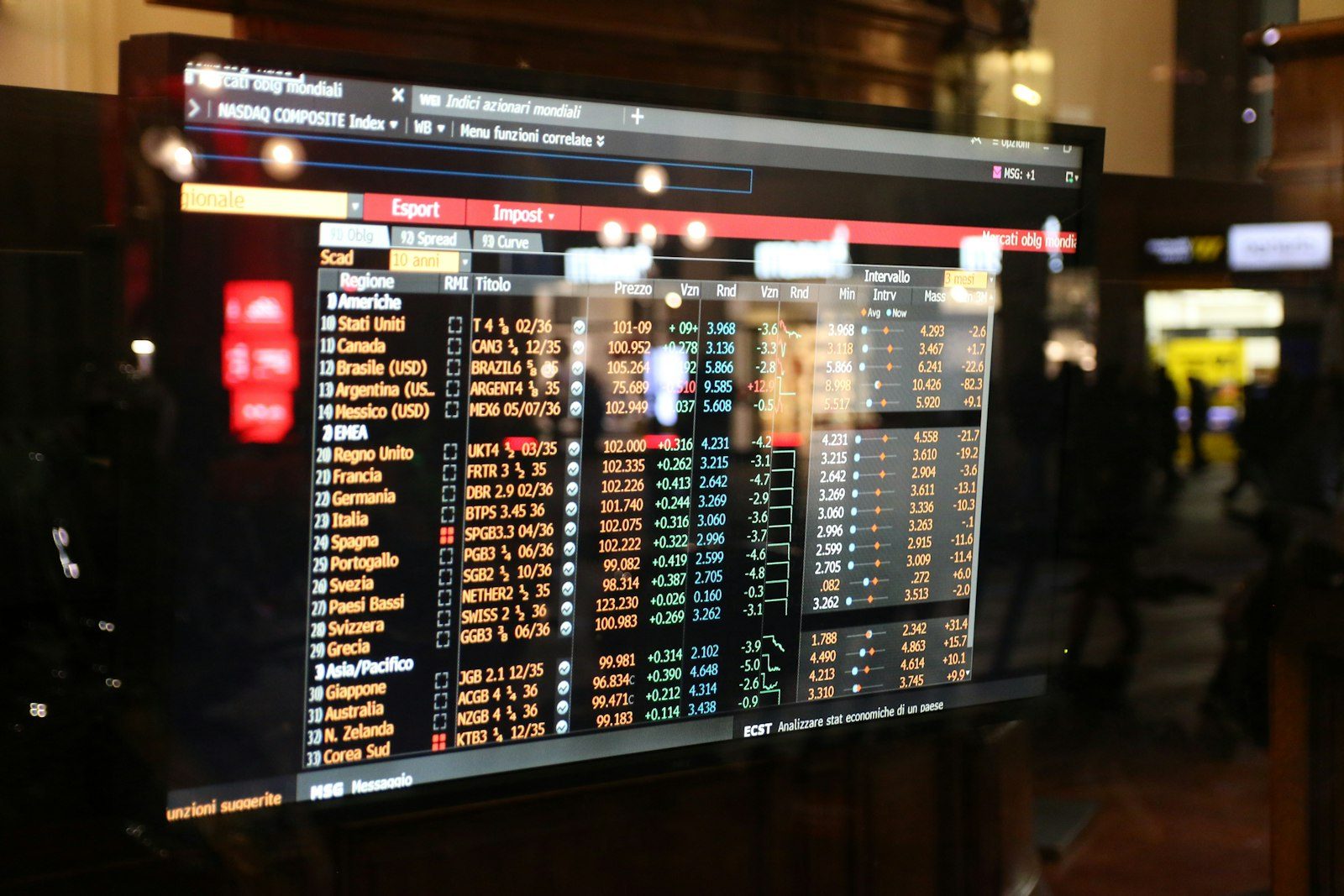
Accenture shares rose on Monday after the company announced a partnership with Anthropic involving a $2 billion investment in AI evaluation, according to Reuters market coverage. The reaction — a gain of several percent in a session already dominated by chip stocks — says something about where enterprise AI spending is heading next.
Evaluation is the least glamorous line item in an AI budget and increasingly the one that determines whether a deployment reaches production. It covers benchmarking model outputs against task-specific standards, red-teaming for failure modes, monitoring drift after release, and documenting all of it well enough to satisfy auditors, regulators and customers.
The commercial logic is straightforward. Most large organizations have moved past pilot enthusiasm and into a harder phase where a model that performs well in a demo has to survive procurement review, legal sign-off and a service-level agreement. The bottleneck is rarely model capability. It is the absence of an accepted method for proving capability in a specific workflow.
That gap creates a services market. A systems integrator with regulated-industry relationships and a model developer with frontier capability are assembling the two halves of an assurance offering: the technical apparatus to measure behavior, and the institutional credibility to sign off on the result in front of a board.
The announcement landed in the same session that AI-linked equities rebounded from a selloff triggered a week earlier by warnings from AI company leaders about the pace of development. Investors took Monday's data as evidence that spending on the technology was still expanding. Evaluation spending fits that pattern precisely — it is what organizations buy when they intend to deploy at scale rather than experiment.
For enterprise buyers, three practical implications follow. First, evaluation criteria should be defined before vendor selection, not after, because the criteria determine which vendor can actually win. Second, evaluation is a recurring operating cost, not a one-time project, since model updates invalidate prior results. Third, the evidence produced has to be legible to non-technical reviewers.
There is a competitive dimension as well. Companies that can demonstrate measured, documented AI performance can sell into regulated sectors — financial services, healthcare, defense supply chains — where undocumented systems are disqualifying. Assurance becomes a market-access asset rather than a compliance expense.
The risk in the model is circularity: the same ecosystem that builds the systems also grades them. Mature assurance markets in other industries resolved this through independent standards bodies and third-party attestation, and enterprise AI has not yet produced an equivalent.
What the partnership signals to the rest of the market is that the enterprise AI spend is broadening out from compute and licenses toward integration, measurement and governance. That is a healthier revenue mix for the services sector and a more demanding one for model vendors, who will increasingly be asked to prove specific performance rather than general capability.
The companies that treat evaluation as a product requirement now will spend less time next year explaining to customers why a system that performed well in a pilot behaves differently in production.